

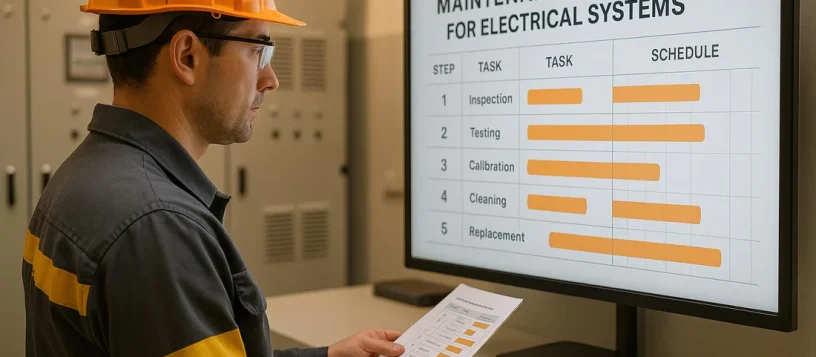
Electrical substations are the backbone of Saudi Arabia’s power infrastructure, transmitting electricity from generation facilities to homes, businesses, and industries. With the Kingdom’s extreme environmental conditions and Vision 2030’s reliability requirements, implementing the right maintenance strategy is critical for operational excellence and asset longevity.
Understanding Maintenance Strategies
1. Reactive Maintenance (Run-to-Failure)
Definition: Addressing equipment issues only after failure occurs.
When It’s Acceptable:
- Non-critical auxiliary equipment
- Redundant systems with backup availability
- Low-cost components where replacement is cheaper than prevention
- Equipment with random failure patterns not predictable by monitoring
Risks in Saudi Context: ✗ Unplanned outages during peak summer demand (50°C+ temperatures) ✗ Emergency repair costs 3-5x higher than planned maintenance ✗ Safety incidents from unexpected equipment failures ✗ Regulatory non-compliance with SEC and ARAMCO standards ✗ Production losses in industrial facilities
Conclusion: Not recommended for critical substation equipment in Saudi Arabia’s demanding operational environment.
2. Preventive Maintenance (Time-Based)
Definition: Scheduled maintenance activities performed at predetermined intervals regardless of equipment condition.
Key Components:
A. Routine Inspections (Monthly/Quarterly)
- Visual inspections for oil leaks, corrosion, and physical damage
- Infrared thermography for hot spot detection
- Cleaning of insulators and bushings (critical in dusty environments)
- Verification of oil levels and pressure readings
- Security system checks and vegetation control
B. Scheduled Maintenance (Annual/Bi-annual)
- Transformers:
- Oil sampling and dielectric testing
- Dissolved gas analysis (DGA)
- Winding resistance measurements
- Tap changer inspection and lubrication
- Bushing power factor testing
- Cooling system maintenance
- Circuit Breakers:
- Contact resistance testing
- Timing and travel analysis
- Mechanism lubrication and adjustment
- SF6 gas pressure and quality testing
- Control circuit verification
- Spring charging motor inspection
- Switchgear:
- Contact inspection and cleaning
- Mechanical interlock testing
- Busbar torque verification
- Insulation resistance testing
- Arc flash hazard assessment updates
- Protection Systems:
- Relay calibration and testing
- Battery bank capacity testing
- DC system insulation monitoring
- Communication system verification
- Coordination study updates
C. Major Overhauls (5-10 years)
- Complete equipment disassembly and inspection
- Winding and core examinations
- Oil filtration or replacement
- Component replacement based on wear
- System upgrades and modernization
Advantages of Preventive Maintenance: ✓ Predictable maintenance schedules and budgeting ✓ Reduced unexpected failures (60-70% reduction) ✓ Extended equipment lifespan (20-30% improvement) ✓ Compliance with manufacturer warranties ✓ Meets SEC and ARAMCO maintenance requirements ✓ Improved safety through systematic inspections
Disadvantages: ✗ May perform unnecessary maintenance on healthy equipment ✗ Cannot detect failures occurring between scheduled intervals ✗ Requires equipment downtime for inspections ✗ Labor-intensive and resource-heavy ✗ May miss developing defects that occur randomly
Best For:
- Regulatory compliance requirements
- Equipment with known wear-out patterns
- Components with manufacturer-recommended intervals
- Budget planning and resource allocation
3. Predictive Maintenance (Condition-Based)
Definition: Maintenance performed based on actual equipment condition, determined through continuous or periodic monitoring and diagnostic testing.
Advanced Monitoring Technologies:
A. Online Monitoring Systems
Transformer Monitoring:
- Dissolved Gas Analysis (DGA) Online: Continuous monitoring of hydrogen, methane, ethane, ethylene, and acetylene levels
- Furan Analysis: Detects paper insulation degradation
- Moisture-in-Oil Monitoring: Real-time water content measurement
- Load and Temperature Monitoring: Winding hot-spot temperature calculation
- Bushings Monitoring: Capacitance and power factor trending
- Partial Discharge Detection: Early warning of insulation defects
Circuit Breaker Monitoring:
- Contact Wear Monitoring: Cumulative interrupting current tracking
- Mechanical Performance Analysis: Coil current signature analysis
- SF6 Gas Density Monitoring: Continuous pressure and temperature compensation
- Spring Charge Time Monitoring: Mechanism health assessment
- Trip/Close Coil Circuit Supervision: Control circuit integrity
Switchgear Monitoring:
- Partial Discharge Monitoring: TEV (Transient Earth Voltage) and ultrasonic detection
- Temperature Monitoring: Fiber optic or wireless sensors on critical connections
- Mechanical Position Indication: Real-time switch position verification
- Arc Flash Detection: Light and current sensors for rapid fault detection
Substation-Level Monitoring:
- Power Quality Analyzers: Harmonics, voltage sags, and transients
- Grounding System Monitoring: Continuous earth resistance measurement
- Battery Monitoring Systems: Individual cell voltage, temperature, and impedance
- Environmental Sensors: Temperature, humidity, and dust levels
B. Advanced Diagnostic Testing
Infrared Thermography:
- Frequency: Quarterly or before peak summer season
- Applications:
- Busbar connections and terminations
- Transformer bushings and radiators
- Circuit breaker contacts and connections
- Cable terminations and joints
- Control panel components
- Saudi-Specific Consideration: Schedule inspections during early morning or evening to avoid solar heating effects; establish baseline temperatures during cooler months
Ultrasonic Testing:
- Applications:
- SF6 gas leak detection
- Partial discharge localization
- Mechanical bearing wear assessment
- Vacuum bottle integrity testing
- Compressed air system leaks
Oil Analysis:
- Dielectric Strength: Minimum 30 kV for 132kV systems (IEC 60156)
- Water Content: <20 ppm for transformers, <15 ppm for circuit breakers
- Acidity: <0.1 mg KOH/g (ASTM D974)
- Interfacial Tension: >25 dynes/cm (ASTM D971)
- Color and Appearance: Clear, bright, free from particles
Vibration Analysis:
- Applications:
- Transformer core and winding integrity
- Cooling fan and pump bearings
- Tap changer mechanism health
- Circuit breaker operating mechanism
C. Data Analytics & AI
Predictive Analytics Platforms:
- Machine Learning Algorithms: Pattern recognition from historical data
- Trend Analysis: Identifying gradual degradation before failure thresholds
- Remaining Useful Life (RUL) Estimation: Asset replacement planning
- Anomaly Detection: Automatic flagging of abnormal conditions
- Integration with SCADA: Real-time decision support
Advantages of Predictive Maintenance: ✓ Maintenance only when needed (optimizes resources) ✓ Early fault detection (weeks or months before failure) ✓ Reduced unplanned downtime (80-90% reduction) ✓ Extended maintenance intervals (30-50% longer) ✓ Data-driven decision making ✓ Optimized spare parts inventory ✓ Improved safety through continuous monitoring
Disadvantages: ✗ Higher initial investment in monitoring equipment ✗ Requires specialized training and expertise ✗ Data management and interpretation complexity ✗ Potential for false alarms if not properly calibrated ✗ Dependency on technology and communication systems
Best For:
- Critical assets with high failure costs
- Expensive equipment requiring long lead-time replacements
- Remote or hard-to-access substations
- Assets with variable operating conditions
- Integration with digital transformation initiatives
4. Prescriptive Maintenance (AI-Driven)
Definition: Advanced maintenance strategy using AI and machine learning to not only predict failures but also recommend optimal maintenance actions.
Emerging Technology:
- Recommends specific maintenance actions based on multiple variables
- Optimizes maintenance schedules across entire asset portfolio
- Considers weather forecasts, load patterns, and resource availability
- Provides cost-benefit analysis of maintenance options
- Continuous learning from maintenance outcomes
Current Status in Saudi Arabia: Pilot projects with SEC and major industrial facilities; expected widespread adoption by 2028-2030.
Maintenance Strategy Comparison
| Factor | Preventive | Predictive | Prescriptive |
|---|---|---|---|
| Initial Cost | Low-Medium | High | Very High |
| Technology Requirement | Basic | Advanced | Cutting-edge |
| Training Needs | Moderate | High | Very High |
| Downtime Reduction | 40-60% | 70-90% | 85-95% |
| Maintenance Cost Savings | 20-30% | 40-60% | 50-70% |
| Implementation Time | 3-6 months | 12-18 months | 24-36 months |
| Best For | Compliance, budget control | Critical assets, reliability | Digital transformation |
Saudi Arabia-Specific Maintenance Considerations
Environmental Challenges:
1. Extreme Heat (May-September)
- Impact: Accelerated insulation aging, increased load, thermal expansion
- Maintenance Adjustments:
- Increase infrared inspections during peak heat
- Monitor transformer loading and temperatures closely
- Verify cooling system performance before summer
- Check oil levels (thermal expansion effects)
- Inspect expansion joints and flexible connections
2. Dust and Sandstorms (Year-round, especially spring)
- Impact: Insulator contamination, reduced clearance, equipment wear
- Maintenance Adjustments:
- Monthly insulator cleaning during dust season
- Install pollution monitoring equipment
- Apply RTV (Room Temperature Vulcanizing) silicone coatings
- Increase frequency of air filter replacements
- Inspect and clean ventilation systems
3. High Humidity (Coastal areas: Al Jubail, Yanbu, Dammam)
- Impact: Corrosion, insulation degradation, condensation
- Maintenance Adjustments:
- Enhanced corrosion protection inspections
- Moisture control in control panels (heaters, desiccants)
- Frequent oil moisture testing
- Stainless steel hardware in coastal installations
- Dehumidification systems in indoor substations
Regulatory Requirements:
Saudi Electricity Company (SEC):
- Mandatory annual maintenance reporting
- Compliance with SEC Grid Code
- Approved maintenance contractors list
- Standardized maintenance procedures
- Incident reporting within 24 hours
Saudi Aramco (SAES-P-100):
- Stricter maintenance intervals for critical facilities
- Mandatory predictive maintenance for 132kV+ assets
- Certified contractor requirements
- Enhanced documentation and auditing
- Emergency response time requirements
SASO Standards:
- Equipment certification requirements
- Maintenance procedure standardization
- Safety compliance verification
- Environmental regulations (SF6 handling)
Recommended Maintenance Strategy by Asset Type
Critical Assets (Predictive + Preventive):
- Power transformers (>10 MVA)
- 132kV and above circuit breakers
- GIS switchgear
- Protection and control systems
- Station service transformers
Important Assets (Preventive with selective predictive):
- Distribution transformers (1-10 MVA)
- 33kV switchgear
- Cable systems
- Battery banks and DC systems
- Capacitor banks
Non-Critical Assets (Preventive):
- Auxiliary equipment
- Lighting systems
- Fencing and security
- Buildings and structures
- Vegetation control
Gridtech Experts Engineering: Comprehensive O&M Services
Our Maintenance Programs:
1. Basic Preventive Maintenance Package
- Scheduled inspections per manufacturer recommendations
- Annual testing and calibration
- Emergency repair support (8-hour response)
- Maintenance documentation and reporting
- Compliance with SEC and ARAMCO standards
- Ideal For: Small to medium substations, budget-conscious clients
2. Advanced Predictive Maintenance Package
- All preventive maintenance services
- Quarterly infrared thermography
- Online DGA monitoring for transformers
- Partial discharge testing (bi-annual)
- Oil analysis and trending
- 24/7 remote monitoring support
- 4-hour emergency response
- Ideal For: Critical industrial facilities, data centers, hospitals
3. Comprehensive Asset Management Package
- Full predictive and preventive maintenance
- 24/7 online monitoring and SCADA integration
- AI-driven analytics and reporting
- Spare parts inventory management
- Dedicated account manager and engineering team
- 2-hour emergency response with mobile workshop
- Asset lifecycle planning and budgeting support
- Training for client personnel
- Ideal For: Large industrial complexes, utility substations, mission-critical facilities
Our Capabilities: ✓ Certified Technicians: ARAMCO and SEC-approved personnel ✓ Advanced Equipment: State-of-the-art diagnostic and testing instruments ✓ Calibration: All equipment calibrated to international standards ✓ Safety: Zero-incident record with comprehensive HSE programs ✓ Coverage: All regions of Saudi Arabia ✓ Standards: IEC, IEEE, SAES, and SEC compliance ✓ Documentation: Bilingual reports (Arabic/English)
Technology Partners:
- OMICRON (testing equipment)
- Megger (diagnostic instruments)
- Doble (transformer testing)
- Fluke (infrared thermography)
- Siemens (monitoring systems)
Conclusion
The optimal maintenance strategy for your substation depends on multiple factors: asset criticality, budget constraints, regulatory requirements, environmental conditions, and organizational goals. In Saudi Arabia’s challenging climate and with Vision 2030’s reliability targets, a hybrid approach combining preventive and predictive maintenance often delivers the best results.
At Gridtech Experts Engineering, we don’t just perform maintenance—we partner with you to develop customized strategies that maximize asset performance, minimize downtime, and ensure regulatory compliance. Our experienced engineers, advanced diagnostic capabilities, and commitment to safety excellence make us the trusted O&M partner for utilities, EPC contractors, and industrial clients across the Kingdom.
Contact us today for a free maintenance assessment and customized proposal for your substation assets.
